Keep an alcohol log for a more useful conversation
Before changing your drinking: if you are physically dependent on alcohol, stopping suddenly can be harmful. Seek medical advice about a safe plan. See NHS alcohol support.
When you want to record a difficult moment, a long form can feel like too much. A short note can preserve what happened, how you felt and what you want to discuss later. Voice is one option; a few manually entered details may be more comfortable in a shared space.
Illustrative example: Someone notices that several notes about drinking mention the same stressful evening meeting. They bring the entries to a support conversation and consider a different plan for that part of the day. This is an example of reflection, not a customer story or a demonstrated treatment outcome.
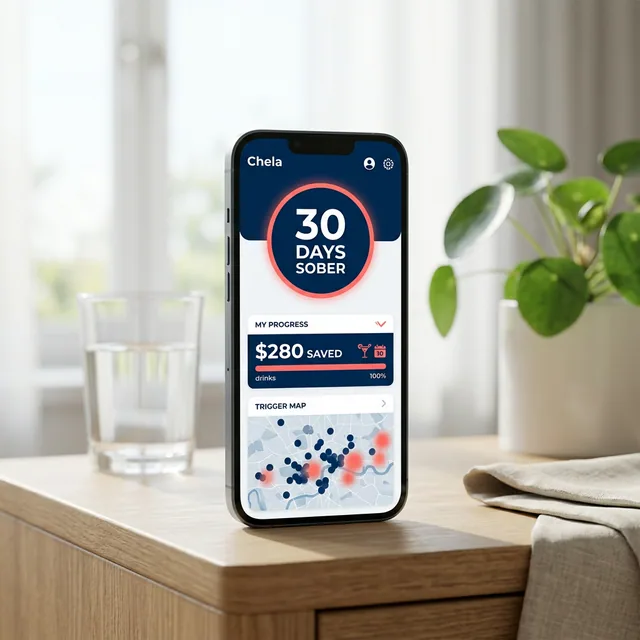
Chela includes Quit It for tracking habits you want to change. You can keep that record alongside voice reflections and use the app’s visual history to revisit what you recorded about alcohol use. The App Store release notes describe Quit It and the improvements to its tracking history. Those features help organise your record; they do not diagnose a condition or establish a treatment outcome.
Why a short alcohol log can be easier to maintain
If you’ve tried to quit alcohol before, you already know the pattern:
- At first, a new routine may be easy to remember.
- A busy week can leave gaps in the record.
- After a difficult day, keeping a brief factual entry may be more useful than abandoning the log.
A missed goal does not make the earlier entries useless. Keeping the surrounding context can make a later conversation more specific: what changed that week, which situations were difficult and what support was available. The log is one input to that conversation, not a score for your worth or recovery.
You don’t need another place to feel guilty. You need a system that quietly records the truth and shows you how far you’ve actually come.
How to record alcohol-free days and cravings by voice
In Chela, record a note when you choose, or track an appropriate metric manually. State the date and event clearly so you can check the saved entry later:
- Open Chela when you have a private, comfortable moment.
- Record a dated note, such as “Tuesday: no alcohol today; had a craving after work.”
- Check the processed text, event and date. Voice notes require a paid plan; manual metric tracking is available free.
In a reviewed note, useful details may include:
- The date and whether you recorded alcohol use.
- The setting and feelings you chose to describe.
- What happened afterwards, including any support you sought.
- Actual spending or a clearly labelled estimate.
Once you have enough dated entries, try a question such as “What did I record about alcohol this month?” Check the source notes before counting days, and leave missing dates as unknown. A day without an entry is not evidence of an alcohol-free day.
Setting up an alcohol journal in Chela
Start with a simple plan for what you want to record and why. You do not need an elaborate template. A consistent description makes it easier to compare entries later and bring relevant information to a professional or support group.
Step 1 – Define your baseline
Write or record the background you want to keep, such as:
- Typical weekly spend on alcohol (e.g. $60–$120).
- Usual drinking pattern (weeknights, weekends, daily).
- Your goal: quit fully or reduce to specific days.
For example: “I estimate that I spend about $80 a week on drinks, mainly Thursday to Sunday. I want to discuss a safer plan for changing this with my doctor.” Label estimates as estimates and decide the change plan with appropriate support.
Step 2 – Start logging moments, not paragraphs
Every time something related to alcohol happens, you log a short voice note:
- “Craving on day 5, walked past my usual bar.”
- “Skipped drinks after work, went home instead.”
- “Relapse: 3 beers at a friend’s birthday.”
When reviewing the notes, look for details such as:
- The event you described, rather than a label inferred without context.
- Any trigger or circumstance you explicitly mentioned.
- The outcome, if you recorded one, and information that is missing.
Step 3 – Review the entries and the gaps
At the end of a week or month, compare the records you actually made. Questions could include:
- Which dates have an entry, and which dates are missing?
- What did I actually record spending?
- Which situations appear more than once in the notes?
A review might show several alcohol-free days alongside difficult occasions. Keep both in the record. Avoid turning an incomplete set of entries into a precise recovery percentage or a conclusion about when you will be vulnerable.
Money saved: turning progress into something you can feel
If cost matters to you, use a clearly stated baseline and compare it with what you actually spent. You can calculate the difference separately from your notes. Useful things to record include:
- Your baseline amount and the period it covers.
- Actual purchases, including dates and uncertain amounts.
- A separate calculation that states any assumptions.
For example, an $80 weekly baseline and $45 of recorded spending would differ by $35. That is an illustrative calculation, not a Chela customer result. Missing purchases or an inaccurate baseline change the estimate.
Recording a difficult day without discarding earlier entries
A day that did not go as planned still contains useful context. Record only what you are comfortable keeping, using language that helps you review the event without turning it into a judgment about yourself.
A short entry can preserve the occasion and what happened next:
- Record the event in your own words and include its date.
- Keep earlier entries rather than treating one occasion as the whole story.
- Bring recurring concerns to the person supporting your change plan.
This makes your question shift from “Why am I broken?” to: “What conditions make it hardest for me to stay sober?”
Using your habit log alongside therapy, support groups, or medication
A personal journal can help you remember details you want to discuss in medical care, therapy or a recovery group. It does not establish that an intervention works, track medication effectiveness or replace that care. You decide which details to share.
- Bring specific dated notes to an appointment if you want to discuss them.
- Choose a brief summary to share with a support person.
- Record questions about treatment for your clinician rather than changing medication based on an app.
A month of alcohol journaling alongside appropriate support
- Discuss a safe change plan with an appropriate professional when needed.
- Choose a short set of details to record in Chela.
- Make a brief entry when relevant and check its date and wording.
- Review the notes weekly, including missing days.
- At the end of the month, use the record for a support conversation rather than as a diagnosis or recovery score.
Related habit-reflection guides
If you’re rebuilding multiple habits at once, you might also like:
- Quit Smoking with an AI Nicotine & Craving Tracker
- Quit Porn with an AI Urge Tracker (Without Fighting Your Browser All Day)
Keep a record that supports an honest conversation
Changing alcohol use can require support beyond an app. A practical role for a journal is smaller and clear: keep the events and questions you choose to record, so you do not have to reconstruct everything from memory later.
Chela can hold those notes alongside everyday tasks and activity logs. Check the date and wording after processing, and revisit only the information that is useful for your own plan or support conversation.
A first entry could simply be: “This is what I want to understand about my drinking, and this is the person I plan to ask for help.” There is no need to make the note polished or turn it into a public pledge.
Free accounts include manual task creation and metric tracking. Voice notes require a paid plan. See the app for current subscription limits and regional prices.